Make the home you have work better
A renovation begins with what is no longer working: not enough room for guests, awkward circulation, limited storage, or finishes that no longer suit the house. We discuss the purpose of the change before settling on the size of the project. Sometimes a carefully planned room conversion can make a meaningful difference.
A real example: the Ferguson bunk room
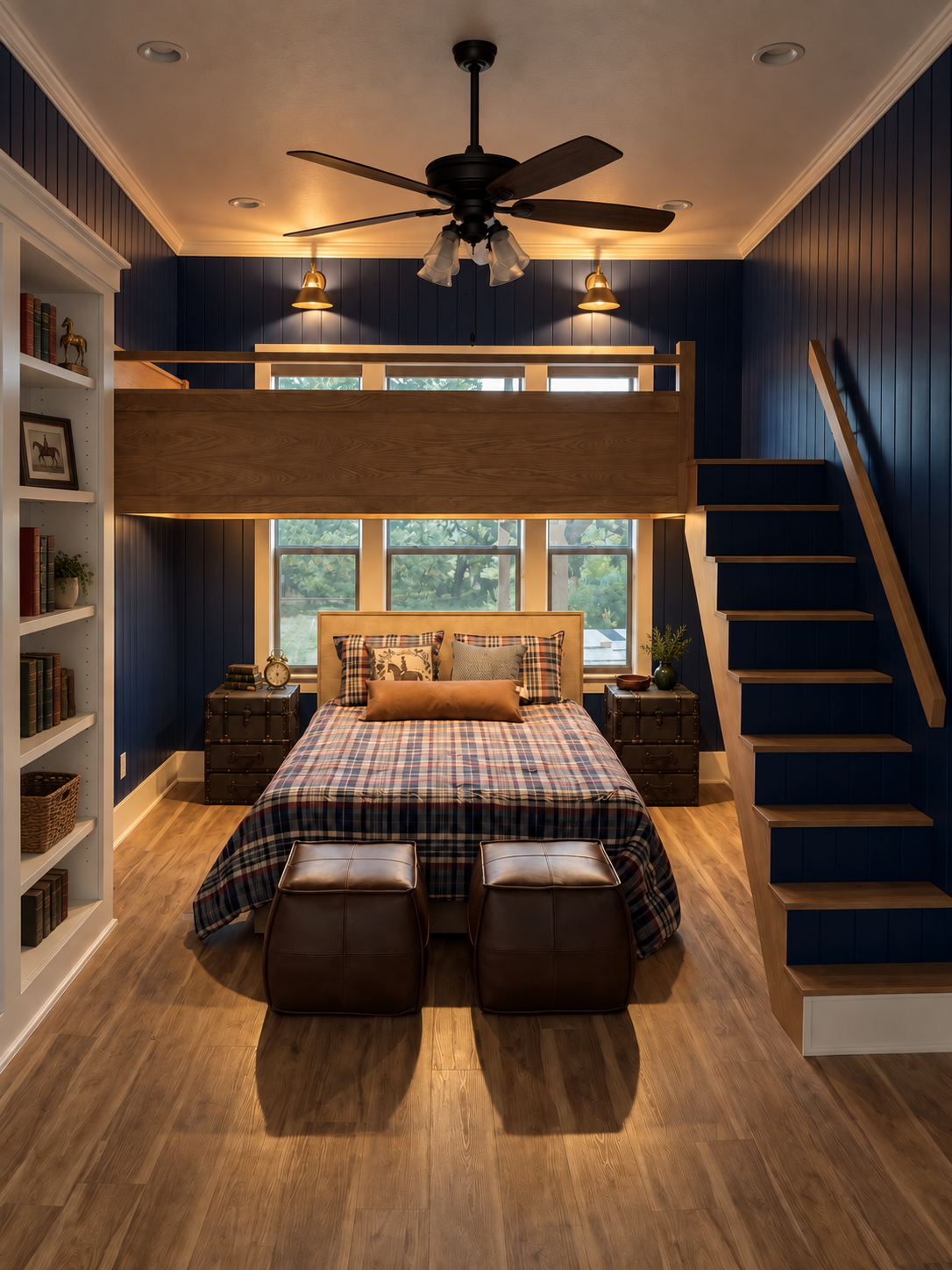
At the Ferguson Residence in Fayette County, an existing office became a custom bunk room. White oak and tailored joinery give the room its character, while individual sleeping areas create places for family to stay. This project shows how an existing space can take on a new role without losing the feeling of home.
Understand what is behind the finishes
Existing framing, utilities, moisture conditions, and previous alterations can influence what a renovation involves. Before work begins, the scope needs to distinguish known work from items that require investigation. Changes affecting structure or building systems need the appropriate professional input for the project.
Plan for the construction period
Discuss whether you will remain in the home, how work areas will be separated, and which rooms or utilities may be unavailable. Selections and long-lead items should be considered alongside the sequence of work. Clear decisions up front help everyone understand what is included and what happens next.